


Project Lead: Anu Rangarajan
Tillage can be a valuable management tool on a vegetable farm but intensive and repeated tillage is hard on soils. We support small to mid-scale vegetable farmers, many using organic practices, in adopting reduced tillage practices on their farm. These practices can take many different forms. Our goal is to integrate reduced tillage with other soil building practices, to foster the growth and viability of vegetable farming in New York and the Northeast.
We work across different tools and practices, fit to the the scale and resources of the farm, and are learning from many innovative farmers leading the way. We conduct applied research to trial new and emerging practices to understand the science behind them while sharing practical lessons learned to support farmers in fitting them into their own operations. We partner with farmers in experimenting on their farm and offer workshops and other training opportunities for farmers to share their methods and ideas with one another. Explore this website to learn more about our research, events, and resources.
Reduced Tillage Resources
Join our email list to hear about new resources as they’re added.
-

Farm Stories
By engaging with experienced farmers, we continue to learn how reduced tillage systems are taking shape on…
-

Reduced Tillage Webinars
The Cornell Small Farms RT Project has collaborated on a variety of webinars to share results from…
-

Strip Tillage
Strip Tillage Home » Projects » Reduced Tillage in Vegetables » Strip Tillage Strip, or zone, tillage…


About Reduced Tillage in Vegetables
Reduced tillage practices minimize soil disturbance with targeted and appropriate tillage based on farm goals. Reduced tillage means less intensity, shallower depth, and less area disturbed, either in the bed, field or across the farm. It can mean less frequent tillage and lead to successful adoption of no-till practices.
Practices take many forms. They may be system-wide, applied across the whole farm, or only fit in a part of the rotation for specific crops. They often maintain the benefits of some tillage for managing weeds, making a better seed bed for crop establishment, or incorporating residues. How they take shape on a farm can depend on farm size and soil characteristics, access to equipment or materials, farm skill sets, and labor availability.
Events
Past Events
July 2025
Tuesday, July 8, 2025 · 5:30 – 6:30 pm EDT Virtual
Project Ground Nesting Bees
Online
Project GNBee – how you can help to preserve our most threatened and valuable pollinators: the ground-nesting, solitary bees. Ground-nesting, solitary bees comprise 70% of all bee species. They are valuable, but vulnerable, pollinators across the landscapes and habitats of…
$20
Thursday, July 3, 2025 · 8 am – 5 pm EDT Virtual
Raising Poultry for Meat Production
Online
Livestock Specialist, Amy Barkley, will lead this virtual seminar on the basics of meat bird production for farmers interested in diversifying their farm operations. The event will focus on breed selection and chick sourcing, housing, and nutritional requirements, as well…
June 2025
Monday, June 30, 2025 · 5 – 6 pm EDT
Pullorum Testing Clinic: Madison County
CCE Madison 100 Eaton St, Morrisville, NY 13408
A negative pullorum test is required for all poultry entering a county or state fair show within 90 days of arrival on site. Please register each exhibitor separately.
Free
Saturday, June 28, 2025 · 9:00 – 11:30 am EDT
Homestead & Small Farm Series – Preserve Your Harvest
4-H Youth Building 170 Fairview Rd, Horseheads, NY 14845
CCE Master Food Preservers will educate participants on dehydrating techniques and freezer jambs.
Free
Thursday, June 26, 2025 · 5:30 – 6:30 pm EDT
Grassland Birds and Working Landscapes
CCE Jefferson 203 N. Hamilton St., Watertown, NY 13601
If you are a farmer, landowner, or Jefferson County resident interested in learning more about our native grassland birds; Please join us for this in-person presentation by Wildlife Biologist – Liz Simons from New York State Department of Conservation. Liz…
Free
Thursday, June 26, 2025 · 5 – 7 pm EDT
Outdoor Mushroom Farming Series: Laying Yard Management, Harvesting, and Gardening
Agroforestry Resource Center (Business Office) 6055 Route 23, Acra, NY 12405
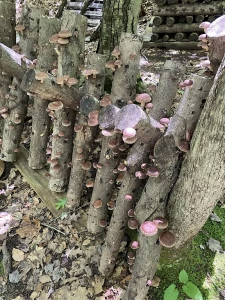
Join us at the shiitake laying yard to learn about managing shiitakes, as well as other mushrooms, as a crop. At this hands-on workshop, participants will experience soaking, fruiting and harvesting shiitakes, and will learn what is required to build…
$25
Thursday, June 26, 2025 · 1 – 4 pm EDT
Successful Agroforestry Tour and Work Day
Wellspring Forest Farm 6164 Deer Run Lane, Trumansburg, NY 14886
Interested in land stewardship that centers tree and forest health alongside farming? Join us for a tour and discussion of the farm systems Wellspring Forest Farm has been developing and learning from for the past 13 years on 20 acres.…
Free
Wednesday, June 25, 2025 · 12 – 1 pm EDT
Farm Net: Talk Saves Lives
Cornell Cooperative Extension Schoharie and Otsego Counties Extension Center 73 South Grand Street,, Cobleskill, NY 12043
A community-based presentation focused on prevention. Learn common risk factors and warning signs associated with suicide. Presented by Jan Kirshenbaum. Free lunch provided.
Free
Tuesday, June 24, 2025 · 5:00 – 6:30 pm EDT
Poultry Workshop: Small Flock Management
CCE Columbia & Greene 479 NY-66, Hudson, NY 12534
Are you thinking of adding a small flock of poultry to your homestead or farm? Join CCE Columbia -Greene and Ulster Counties to discuss the costs and considerations of production. The presentation will cover both laying and meat birds including…
$20
Tuesday, June 24, 2025 · 4 – 7 pm EDT
Soil Health & Climate Resiliency Field Day
Grindstone Farm 3780 County Route 28, Pulaski, NY 13142
If you are looking to improve the quality of your soils, this event is for you. Building soil health can help farms adapt to extreme weather, suppress weeds, and improve overall crop performance. Guest presenter will be Dr. Joseph Amsili,…
$10
Tuesday, June 24, 2025 · All day
NY Soil Health & Climate Resiliency Field Day: Biochar Production and Field Application
Spruce Haven Farm 5004 White Rd, Union Springs, NY 13160
Sunday, June 22, 2025 · 12 – 6 pm EDT
Farm Fest ’25
Finger Lakes Cider House 4017 Hickok Road, Interlaken, NY 14847
Farm Fest is dedicated to celebrating local communities while advocating for a sustainable regional food system that’s ecologically sound, socially just, and economically viable. We hope you will join us to tour the farm, visit the vendor marketplace, pick strawberries…
Free
News and Updates
-
Reduced Tillage on Permanent Beds
by
|
Permanent bed systems can help small farms improve soils and reduce tillage for a diversity of crops. Learn how farmers are adopting these systems and hear research results on how tillage, mulching and tarping practices can impact your weed control, labor use, and crop productivity. Ryan Maher and Brian Caldwell – Cornell University, Mark Hutton – University…
Project Partners
We collaborate with other researchers at Cornell, extension educators within Cornell Cooperative Extension, and other organizations and universities across the Northeast.


About Anu Rangarajan
Anu was appointed director the Cornell Small Farms Program in 2004. At the same time, she opened a U-pick strawberry farm in Freeville, NY. The experience of operating a small farm changed her entire approach to research and extension, and deepened her commitment to NY farms and local food systems.
Read Articles by Anu Rangarajan


Subscribe for Updates and Opportunities
Subscribe to get the latest updates and information on strategies to reduce tillage on your farm. You’ll be first to hear about webinars, field days, and online courses that will connect you with other growers and our research results as we look to find ways to be successful in building soils on your farm.

