
Slow Moving Vehicle Safety Season
In our agricultural communities, farmers are using roadways to move equipment between farms and fields.
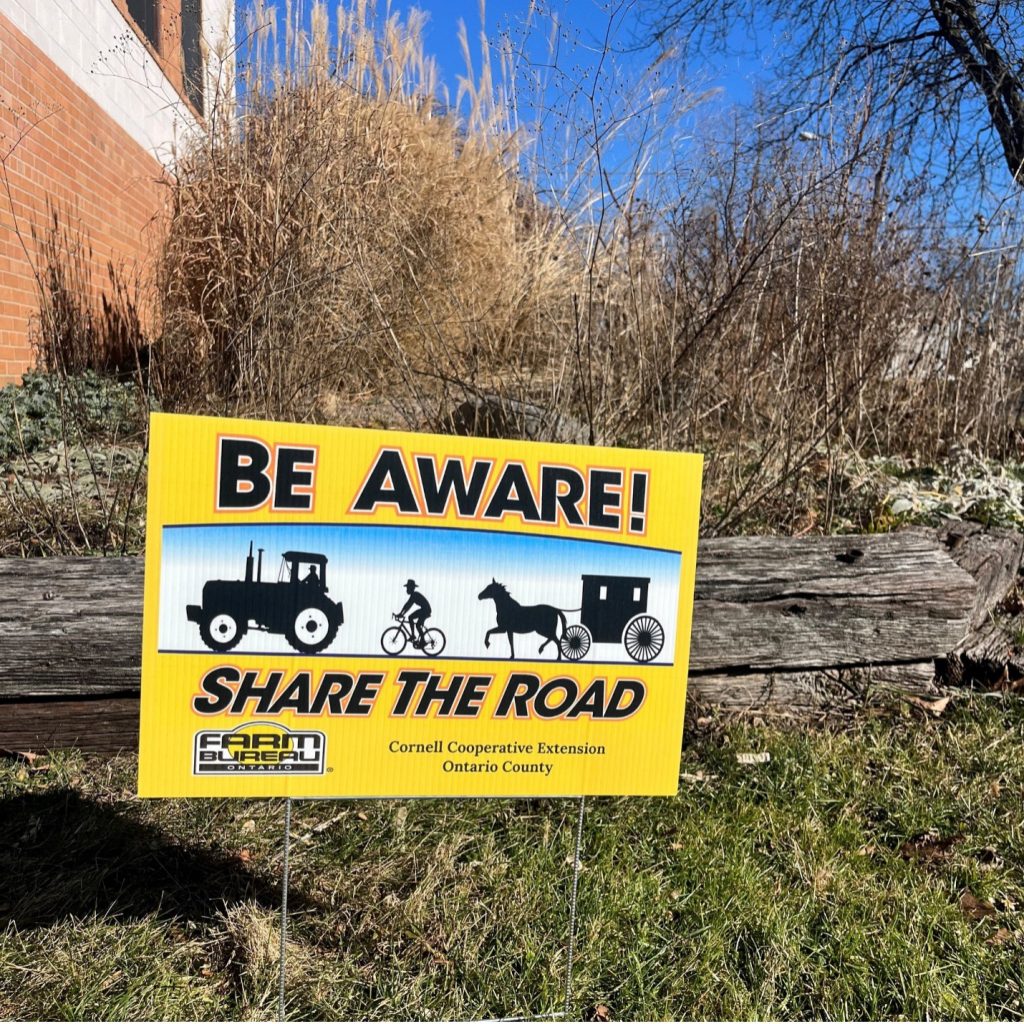
Remember to share the road! Image Provided
Spring is here, and although warmer weather eliminates the risk of snow and ice on roadways, it also marks the season of slow-moving vehicles (SMVs). From April through October, you are far more likely to encounter a slow-moving vehicle on the road. SMVs are defined as any vehicle that operates under 40 mph: including tractors, bicycles, construction vehicles, and animal powered vehicles such as horses and buggies. In our agricultural communities, farmers are using roadways to move equipment between farms and fields, and all over the county many more cyclists are utilizing roadsides. All drivers should be vigilant year-round but keep an extra sharp eye out for slow moving vehicles April through October!
Slow-moving vehicles can be on the road at any time of day but are more common in the mornings and evenings when farmers are starting or ending a day of work. Animal powered vehicles may be more prevalent on Sunday mornings because of church services in Amish and Mennonite communities, or around auctions and markets where these communities are actively involved. Under state law, slow-moving vehicles may be on the road at any time of day and in any weather conditions, so long as they are properly lit and labeled. All SMVs should be labeled with the Slow-Moving Vehicle Emblem, which is a reflective and bright orange triangle, so they are visible to drivers. This emblem is for slow moving vehicles ONLY and it is illegal to place them on stationary objects such as mailboxes. All agricultural equipment must display this symbol, whether it is self-propelled or towed. SMVs on the road after dark or in poor visibility must be equipped with signaling devices, two reflectors on the back as far apart as possible, headlights, amber lamps, and a taillight. SMVS on the roadways should be clearly marked and easy to spot for a vigilant driver.

Slow-moving vehicle symbol. Image Provided
Slow moving vehicles alone can present a hazard to drivers, but the rural roads they are often found on may also be hard to maneuver. When driving on rural roads you may encounter blind hills or driveways, sharp turns, limited vision, loose gravel, and narrow roads. SMVs may take up more than a single lane in the road, making narrow roadways even more challenging. As a driver you should be aware of the possibility that you may need to stop or pull over to make way. SMVs are especially common in rural areas and these combined hazards can result in disaster if drivers aren’t prepared. It is especially important to practice safe driving in rural areas where the danger of road conditions and slow-moving vehicles are combined.
To be courteous to slow moving vehicles and practice good safety on the road, you should slow down immediately upon seeing one. It’s especially important to slow down for animal powered vehicles, such as horses and buggies. Although they are well trained and working horses, equine are animals of prey and can be easily startled. It’s also important to remember SMV operators have limited visibility and may make unexpected movements. Allow a large cushion of space between yourself and any SMV, pass with care only when it is safe and legal to do so. Accidents with slow moving vehicles are easily preventable when precautions are taken, stay alert and stay safe while sharing the road!

