
The Power of Quitting
Farming is family. Rarely have I encountered a group of people who are more motivated, dedicated, innovative and tenacious as farmers. Whether you are tending apples in Orange County or herding sheep in Oregon, we as farmers hold these truths to be self-evident that all farmers will work hard, be good stewards to the land, and share what they have learned with others. But there is a cost to our agrarian stubbornness. All too often, I find that some of us don’t know when to quit. Now I know that your hyper American “I can do anything I set my mind to” mentality is currently telling you that this is not right but bear with me.
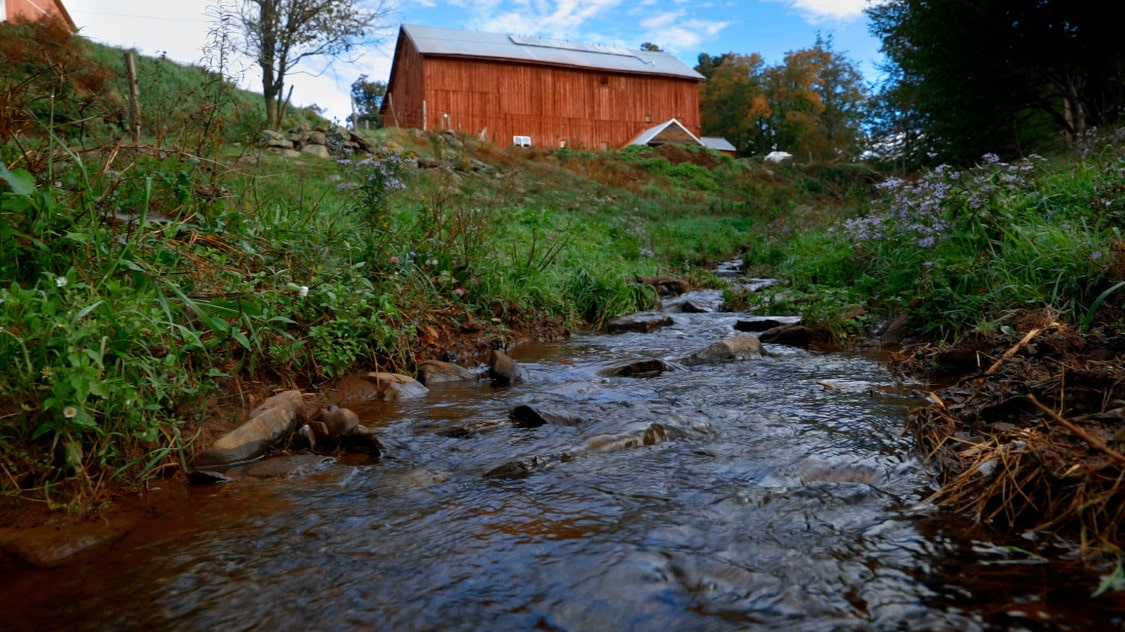
Rose Brook winds by a NYS farm. Jason Koski / Cornell University
We all know that you have to make mistakes to succeed. As Nelson Mandela so eloquently phrased it, “Do not judge me by my successes, judge me by how many times I fell down and got back up again.” This quote rings true for all of us, but getting up does not mean that we get back up and go do the same thing all over again. All too often, I see farming enterprises ride the failure wave from frustration to suffering, to burn out, to blow up. There are reasons that we are reluctant to quit, and not all of them are cultural. There are two major forces at work when dealing with quitting. One is known as sunk cost and the other is opportunity cost. Sunk cost deals with what you have already invested. It is the time or money that you’ve put into a project, which makes quitting hard. The longer you invest in something, the more difficult it is to let it go and that can be a huge mistake when you consider the other concept of opportunity cost. This concept deals with the future. It means that for every hour or dollar you spend on one thing, you’re giving up the opportunity to spend that hour or dollar on something else – something that might make your life better. Instead of directing all of your efforts towards something that isn’t sustainable, you could be directing your energies towards something that might make you happier, that might suit your lifestyle better, that might make you more money. This is why I am a firm believer in the power of quitting.
These two concepts underlie our inability to quit when the timing is right. I am currently witnessing this process on some of the farms in the area. Let’s take for instance Sunny Side Farms (not their real name). They have endured multiple difficult seasons, a broad and varied cast of vegetable products, a CSA population dwindled by the critical mass of small farms in the area, and labor that doesn’t last or doesn’t come. Needless to say, it has been a tough road for these beginning farmers. This scenario is all too common and the way that Sunny Side’s leaders deal with the hardships is to soldier on, to spend more time plugging the dam, expending personal effort and emotion to produce products that are not making them happy or making them money. Many hands make quick work, but in this case the revolving door of overworked and underpaid help have left them high and dry. Here we can apply the sunk cost concept directly. Many years of work, infrastructure and land improvement, plus a dwindling but solid customer base, have all contributed to the operations persistence.
Now I have the luxury of commenting on all of this from afar, but I wonder what if they had quit? What if they had quit the CSA model before the movement was flooded? What if they had concentrated on a different product line that was easier to manage and made more money? What if when they lost their land they walked away and put their time in energy into another project that had nothing to do with farming?
You do not have to temper your passion to quit, and you don’t have to not work hard to quit, you just have to adjust your focus. Granted, this takes two very important skills that are directly related to both the opportunity and sunk cost concepts. You have to be honest with yourself and your team when things are not working, and you have to have set and be bound by goals related to your products. The other side of the coin is that you have to act before you reach critical levels. Here’s a tough example. Sunny Side is planning on planting 500 rows of salad mix thought this season to sell in bags. That is their plan. Their goal and boundaries are if they have not been able to plant, grow, harvest and sell 200 pounds of that by August 1st they will stop all production of salad mix and move onto something else. No more spending time planting, no more time harvesting, and those bags can now go to some other product. Granted there is going to be seed in the shed and product in the ground but those are symbols of your success and not failure in moving on. You have to account for all the time that you now have to invest in other enterprises. If Sunny Side had not invested in quitting they would have no time, energy, or thought to put towards other endeavors.
So here’s to quitting for the good of yourself and business. If you still don’t feel comfortable using the word quitting, how about transitioning or adjusting your focus? Any way you slice it, quitting could be the most important decision you make.


Give up if you don’t see growth! space waves
This really hit home. Sometimes the bravest thing for our farm family is to admit something isn’t working and try a new idea instead. Thanks for the reminder that quitting a bad plan makes room for a better one. Play Pressing Under Pressure
This piece hit home. The Power of Quitting reminds us that stepping back can be an act of courage, not failure. As a student juggling pressure, finding nursing assignment help in the middle of burnout can be the reset that protects mental health and restores focus. Powerful, timely, and motivating.
This really hit home. Sometimes the bravest thing on our little farm is admitting a project just isn’t working and letting it go. Thanks for reminding us that’s part of learning too. Play pokepath tower defense Online for free
This really hit home. Sometimes the bravest thing on our farm is admitting when a crop or an idea just isn’t working. It frees us up to try something better! Play Bitlife Unblocked
This really hit home. Sometimes the bravest thing on our farm is deciding to stop something that isn’t working, so we can focus on what does. It’s like letting a few plants go to make the whole garden healthier. Play Steal Brainrot Online
This really hit home. Sometimes the bravest thing on our farm is deciding to stop doing something that isn’t working, so we can focus on what does. It’s like letting a few crowded seedlings go to give the rest more room to grow. Play Block Blast
This really hit home. Sometimes the bravest thing for our farm was to stop doing something that wasn’t working, even if we’d worked super hard on it. Freeing up that time let us focus on what our family actually loves to grow. Play Minesweeper Plus
This really hit home. Sometimes the bravest thing for our farm family is to admit something isn’t working and try a new path instead. Thanks for the reminder that quitting a bad plan isn’t the same as giving up. Use Flux 2
This really hit home! It’s like telling a kid it’s okay to put down the puzzle piece that just won’t fit and try a different one. Sometimes the bravest thing for our farm is to stop doing what’s not working. Use Image to Image
This really hit home. Sometimes the bravest thing for our farm family is to admit something isn’t working and try a new path instead of just working harder. Thanks for the reminder that quitting can be smart, not weak. Play Orbit Kick
This really hit home. Sometimes the bravest thing for our farm family is to admit something isn’t working and try a new path instead of just working harder. Thanks for the reminder that quitting can be smart, not weak. Play Bird Game 3
This really hit home. Sometimes the bravest thing for our farm family is to admit something isn’t working and try a new idea instead. Thanks for the reminder that quitting a bad plan isn’t the same as giving up. Play Storm Grill
This really hit home. Sometimes the bravest thing for our farm family is to admit something isn’t working and try a new idea instead. Thanks for the reminder that quitting a bad plan isn’t the same as giving up. Use Swipe Ready
This really hit home. Sometimes the bravest thing for our farm family is to admit something isn’t working and try a new path instead of just working harder. Thanks for the reminder that quitting a bad plan isn’t the same as giving up. Play Peggy’s Post
Man, this whole quitting debate really resonates. I once kept trying to grow a certain crop that just wasn’t thriving, thinking, ‘If I just work harder!’ Haha, I was so stubborn! But honestly, sometimes ya just gotta pivot and try something new. Anyone else experience that? Oh, and for a quick distraction, check this out: fnf spaghetti