
Silvopasture Presentations
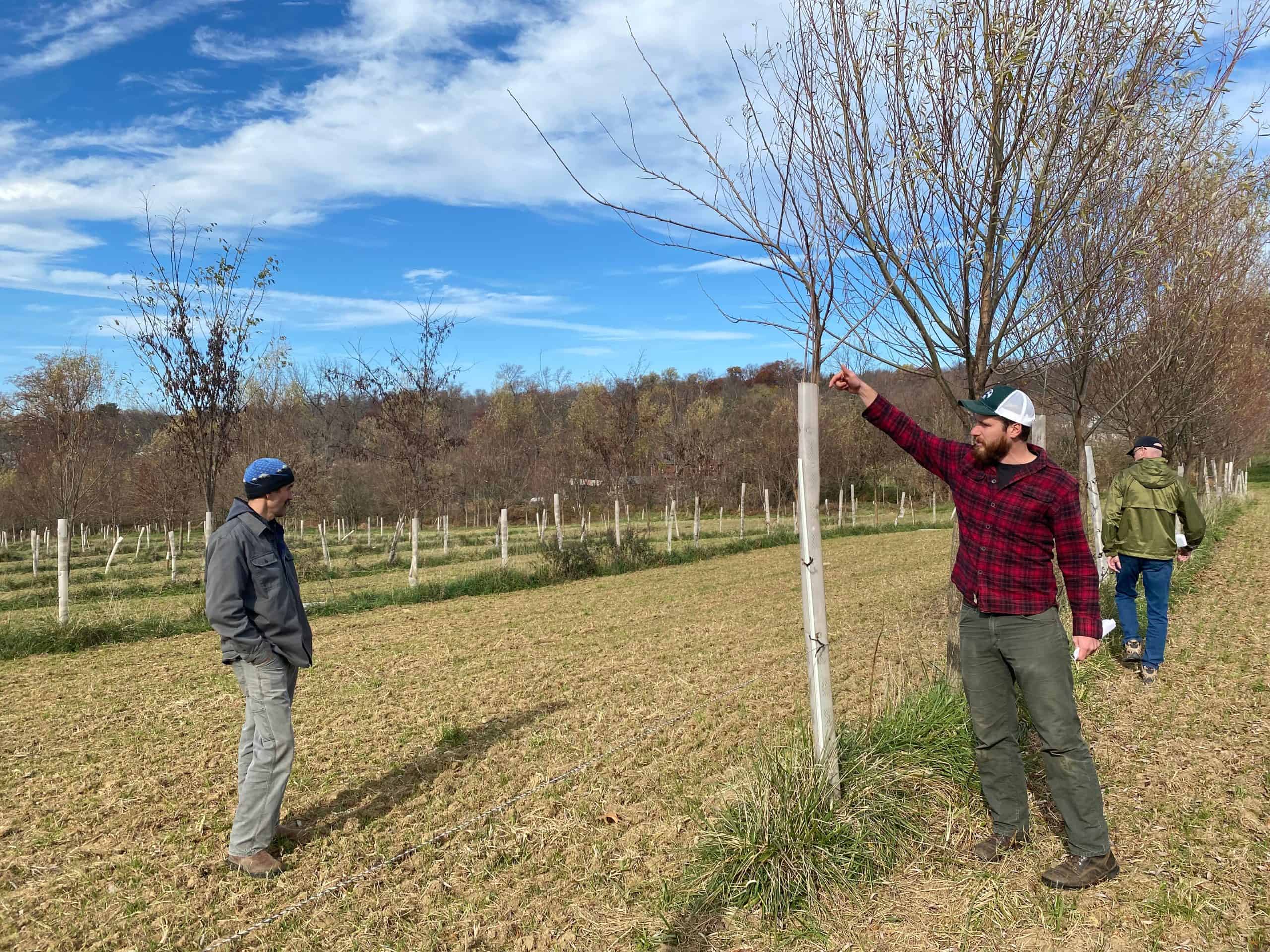
Webinar Recordings from Monthly Silvopasture Program Work Team Meetings
The Silvopasture Program Work Team (PWT) is a loose network of educators, researchers, and technical service providers with a shared interest in silvopasture. We began meeting monthly in May 2024, primarily hosting guest presenters at each meeting to expose members to different aspects of silvopasture, focusing primarily on planted silvopastures.
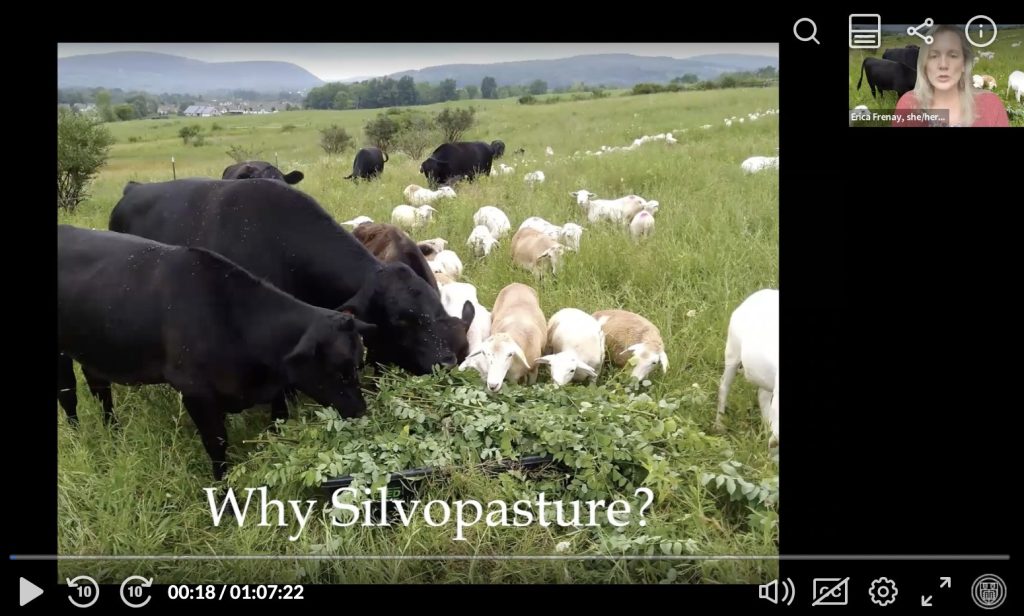
Why Silvopasture?
Why Silvopasture? At this inaugural meeting of the Silvopasture PWT, Erica Frenay shares why she was interested in implementing silvopasture on her farm, and how she got enough training and confidence to move forward. Connor Youngerman, co-chair of the Agroforestry PWT, shares results of farmer interest from a survey done by that PWT in 2021, and the attendees break into smaller groups to discuss and then share why they’ve joined this group.
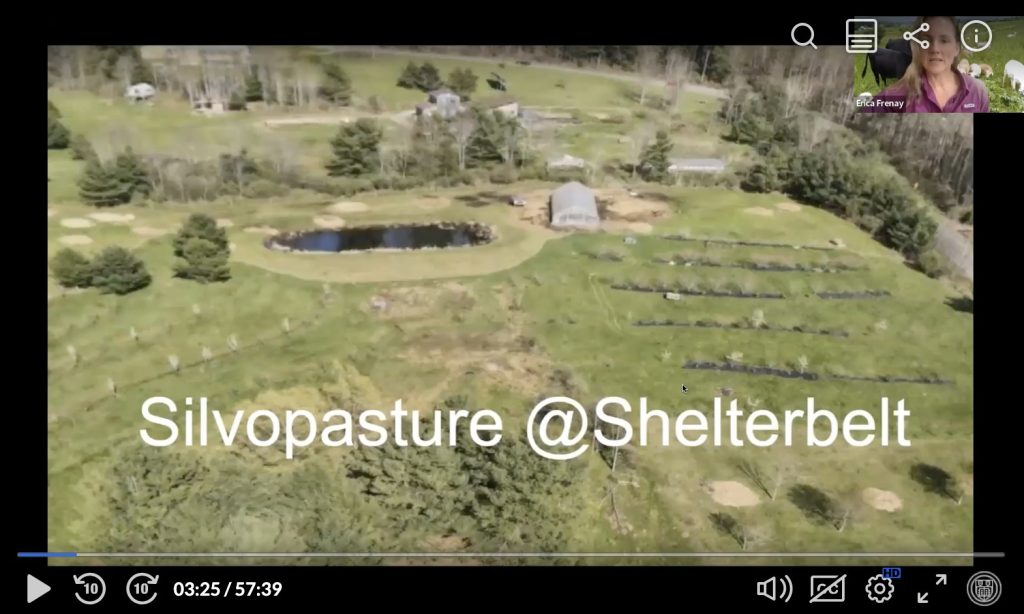
Getting Started with Trees in Pastures
Getting Started with Trees in Pastures by Erica Frenay of Cornell Small Farms Program and Shelterbelt Farm, and Lynn Bliven of CCE Allegany County and Wild Geese Farm. Both farmer educators share the details of silvopasture system design, tree sourcing, planting method, and how they protect the trees from livestock.
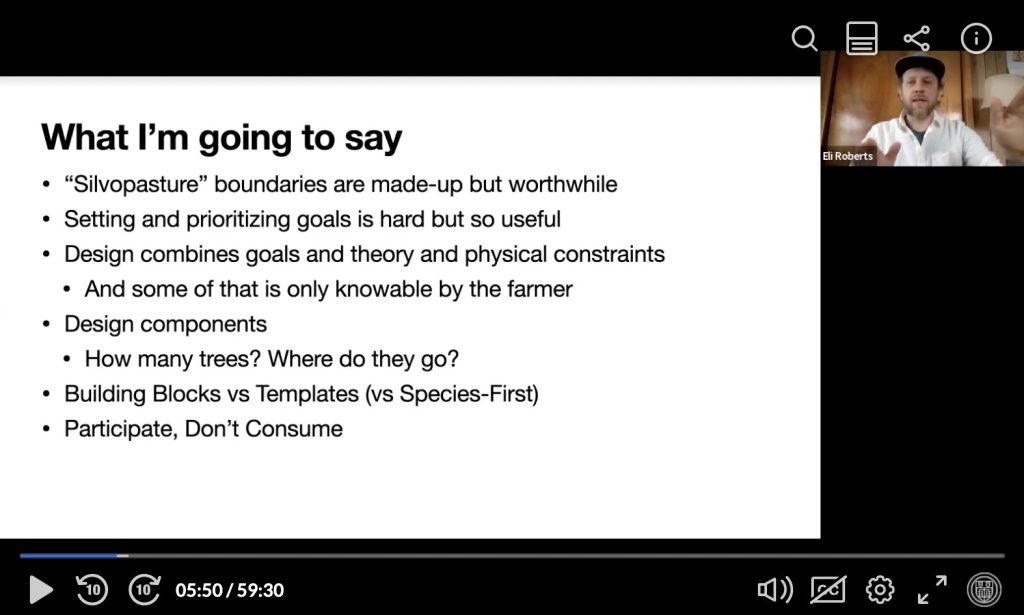
Foundational Design Principles for Additive Silvopasture
Foundational Design Principles for Additive Silvopasture by Eli Roberts of Sunfleck Consulting. Eli is a very thoughtful designer with significant experience in the design of integrated tree-livestock systems. Here he offers his distilled thoughts on good design principles.
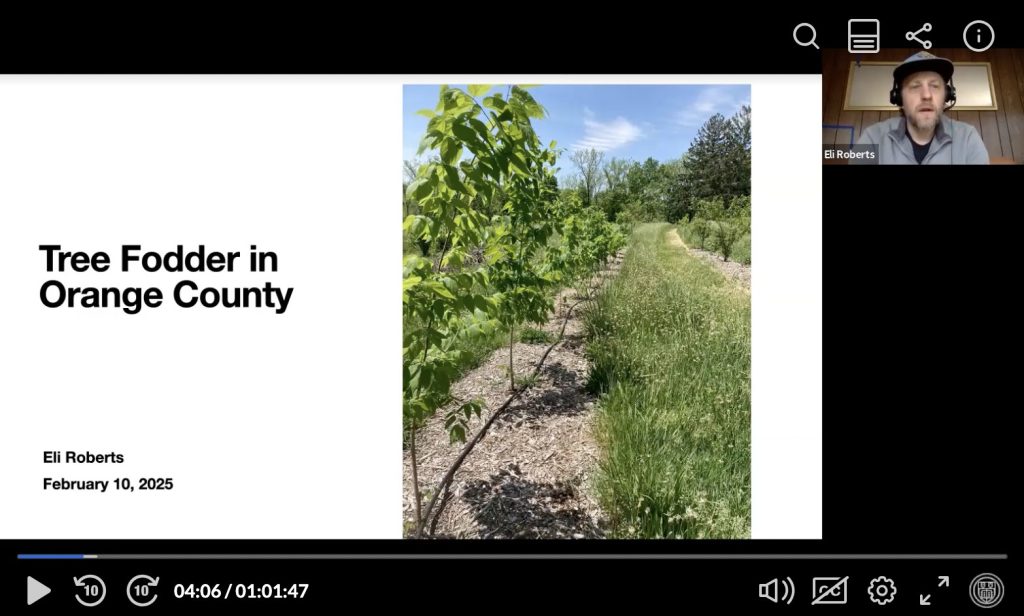
Details of a Fodder System at All One, One All Farm
Details of a Fodder System at All One, One All Farm by Eli Roberts of Sunfleck Consulting. Eli joined us again to dive into the details of a silvopasture system he designed, planted, and maintained for several years at All One, One All Farm in NY.
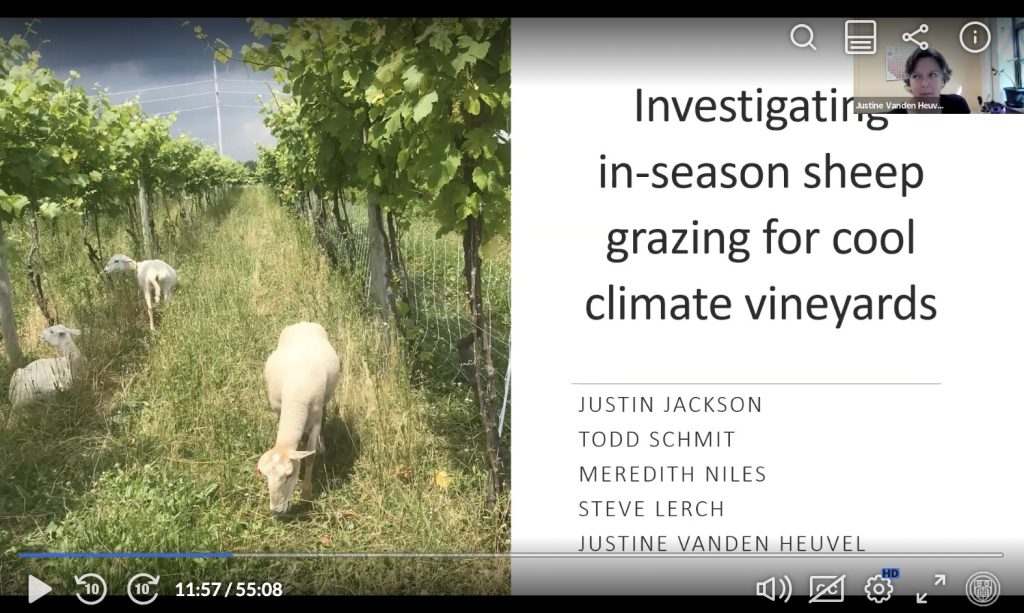
Investigating in-season sheep grazing for cool climate vineyards
Investigating in-season sheep grazing for cool climate vineyards by Justine Vanden Heuvel. Dr. Vanden Heuvel is a Professor in Cornell’s Horticulture section. While she doesn’t often use the word “silvopasture” to refer to her work—tending to use “integrated crop-livestock systems” instead—she is doing important research on the integration of livestock in orchards of woody perennials (aka vineyards), which sounds a lot like silvopasture to us!
Organic Dairy Silvopasture Planting
Organic Dairy Silvopasture Planting by Kathie Arnold of Twin Oaks dairy in Truxton, NY. Kathie is a long-time organic dairy farmer who took time away from her farm duties to share how and why she is investing in planted silvopastures on her farm.
Tree Harvest and Use Within Existing Silvopastoral Systems
Tree Harvest and Use Within Existing Silvopastoral Systems by Shana Hanson of 3 Streams Farm in ME. Shana offers an example of a silvopasture system not commonly seen: she feeds her herd of goats on leaves cut from existing forest trees. She also ensiles these leaves and has collected and analyzed extensive amounts of data (via 3 SARE Farmer Grants) to understand the feed value and palatability of these leaves. [NOTE that the audio quality of this recording is terrible for the first 9 minutes but is fine after that]
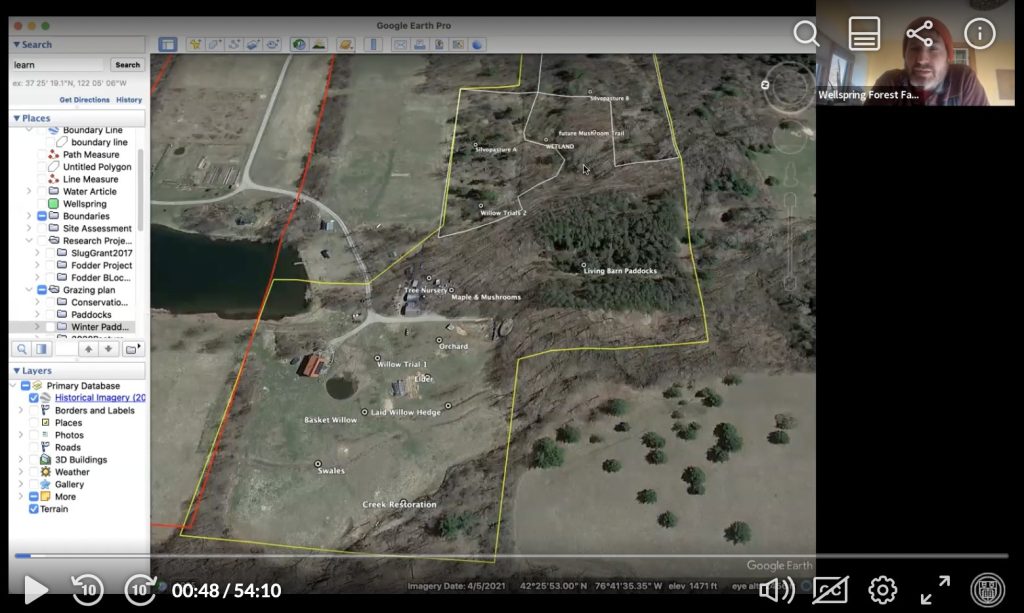
Getting Silvopasture Off the Ground at Wellspring Forest Farm
Getting Silvopasture Off the Ground at Wellspring Forest Farm by Steve Gabriel. In this video Steve describes how and why he has integrated silvopasture into his farm, including his design principles and lessons learned.

Nobody Wants Trees in Their Pastures, Do They?
Nobody Wants Trees in Their Pastures, Do They? by John Fike, Virginia Tech. John walks us through his experience with silvopasture, some historical context, research results (including shade benefits), and rates of adoption and producer perspectives.
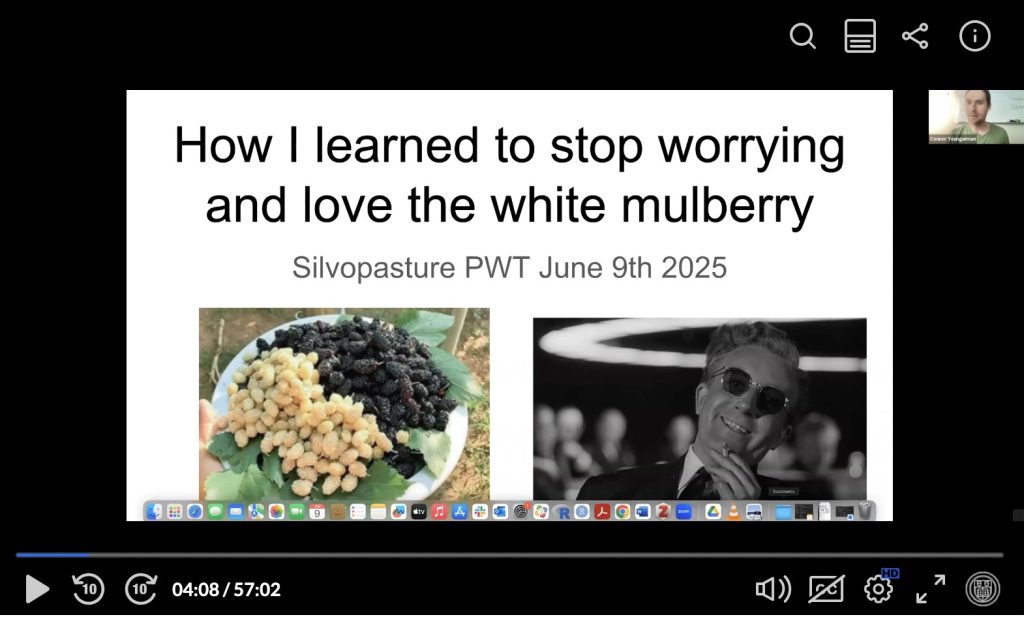
How I Learned to Stop Worrying and Love the White Mulberry, or White Mulberry as the King of Silvopasture
How I Learned to Stop Worrying and Love the White Mulberry, or White Mulberry as the King of Silvopasture by Connor Youngerman, Agfoforestry Specialist for the Cornell Small Farms Program. Connor makes a compelling case for the use of mulberries in silvopasture systems especially as fodder trees, laying out their ancient history of use around the world, and the scientific literature documenting their many benefits. You will never look at a mulberry tree the same after hearing Connor wax poetic about them.
How I Learned to Stop Worrying and Love the White Mulberry, or White Mulberry as the King of Silvopasture
How I Learned to Stop Worrying and Love the White Mulberry, or White Mulberry as the King of Silvopasture by Connor Youngerman, Agfoforestry Specialist for the Cornell Small Farms Program. Connor makes a compelling case for the use of mulberries in silvopasture systems especially as fodder trees, laying out their ancient history of use around the world, and the scientific literature documenting their many benefits. You will never look at a mulberry tree the same after hearing Connor wax poetic about them.
