
Climate & Soil Considerations
Climate and soil factors affect every aspect of farming and shape agricultural operations. This fact sheet provides an overview of the different climate regions found in New York State and outlines a basic introduction to soil physiology. These two elements are the building blocks for any farming work, and developing a thorough understanding of your given climate zone and soil properties will determine the success of your farm.
Over the last century, the average temperature in the Northeastern part of the United States has risen 1.8° F and is expected to continue to rise in coming years. This will increase the frequency of extreme weather events and will not only impact your crops but overall ecosystem biodiversity, including plants, animals, fungi, and pathogens, in ways that are not yet fully understood by experts. Because of this, it is vital that farmers have climate change adaptation strategies and plans ready to use in order to protect their farms.
Before getting started, it may be useful to visit a USDA Service Center and introduce yourself to staff at the Natural Resource Conservation Service (NRCS) and Farm Service Agency (FSA). You may be eligible for free conservation planning and technical assistance with NRCS which would assist you in understanding the topography of your land and getting access to free maps.
Climate Considerations
New York State’s climate is very diverse. It is not uncommon that in traveling <10 miles, you could move from one microclimate to a completely different one. For example, precipitation is double the state average in the Tug Hill Plateau region, and the recommended winter hardiness level changes from -5F° to -40°F in a 100-mile distance as you travel from Wayne County to the Adirondacks.
In 2023, the USDA released an updated Plant Hardiness Zone Map, which provides a standard for farmers and growers to understand the plants that will grow the best in local regions. The map was updated to reflect the overall increase in average temperature.
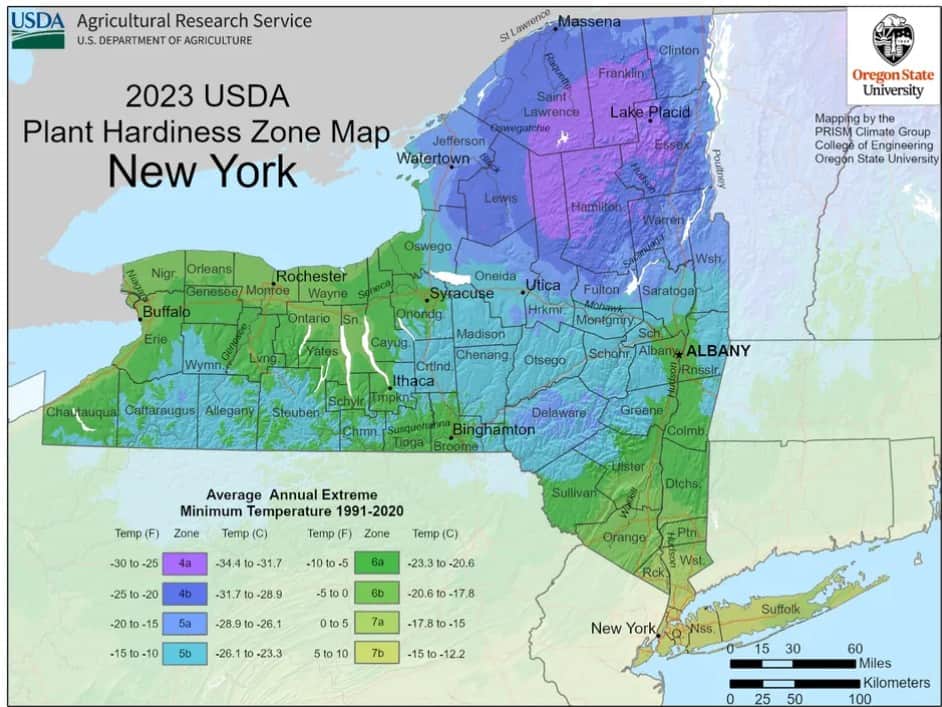
planthardiness.ars.usda.gov
New York State is home to many USDA Hardiness Zones and identifying your zone is an integral climate consideration.
Climatic factors that impact crop growth include:
- Minimum temperatures
- Hardiness zones
- Frost-free dates
- Growing degree-days
- Precipitation
- Air drainage
For information about the climate in a particular area of NYS, contact:
Northeast Regional Climate Center or call 607-255-1751
Featured Resource: Climate Smart Farming Program
Cornell’s Climate Smart Farming program is an initiative that helps farmers in the Northeastern US reduce greenhouse gas emissions and increase farm resilience to extreme weather through adoption of best management practices.
Soil Considerations
Soils vary in their properties and influence what crops will grow. Important soil characteristics include:
- Texture – the percent of sand, silt, or clay particles that make up the soil, as depicted in the chart
- pH – acidity or alkalinity of the soil
- Fertility – nutrients available for crop growth
- Drainage
Select the best soil possible for high-value specialty and agronomic crops; for hay or pasture, soil quality is slightly less critical.
Developing an understanding of the basics of soil physiology and the factors that affect plant fertility is essential for successful agricultural production.
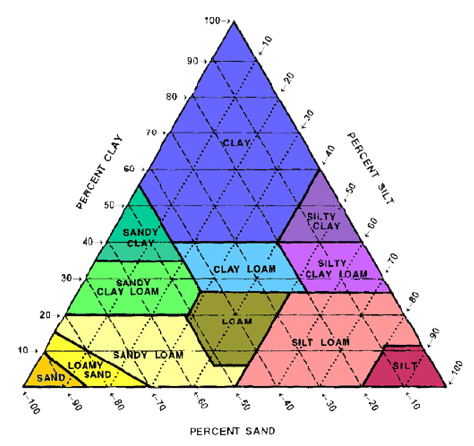
The Soil Texture Pyramid classifies soil samples based on the percentages of clay, silt, and sand present. The most arable soil for most crops is Loam, which is 40% sand, 40% silt, and 20% clay.What is Soil?
In addition to air, water, and nutrients, soils provide mechanical support to growing plants. There are four major components to soil: minerals, organic matter, water, and air. The approximate composition of soil for optimum plant growth would have the solid space made up of 45% mineral and 5% organic matter, and the remainder would have roughly 25% water and 25% air. The water and air would be contained within the pore spaces of the soil.
Soil Texture
Soil texture refers to the size of mineral particles, specifically the relative proportion of various size groups in a given soil. This property helps determine the nutrient-supplying ability of soil solids and the supply of water and air that support plant life.
Soil texture is divided into three parts — sand, silt, and clay — based on particle size. Silt and clay soils impart a fine texture and slow water and air movement. They also have high water holding capacity due to the higher percentage of pore spaces. These are referred to as heavy soils, with clay being the heavier of the two. Clay is also the primary plant nutrient-holding mechanism in the soil.
Soil textural names are how we refer to and identify our soils. Sandy to gravelly soils are referred to as lighter soils, as water moves through more rapidly than the heavier soils, and they have lower water holding capacities. Sandy soils contain 70% or more sand by weight. Clay soils have at least 40% clay and may have names like sandy clay or silty clay. Loamy soils possess the desirable qualities of sand and clay without exhibiting the undesirable characteristics of extreme looseness, low water holding capacity, and slow water and air movement. Some examples would be clay loam, sandy loam, silt loam, and silty clay loam.
Soil pH
Soil pH is used as a measure of its relative alkalinity or acidity. Soil test results for pH are based on a pH scale where 7.0 is neutral, above 7.0 is alkaline and below 7.0 is acidic.
Soil pH is critical to healthy plant growth. It directly affects the availability of the essential nutrients to plants. It is important to know the optimum pH for the plants to be grown. Soil pH also affects the adaptability of plants in a given soil. Most agricultural plants prefer a slightly acidic pH of 6.4. However, there are exceptions so be familiar with the pH and nutritional needs of all the crops to be grown.
The addition of any liming (alkalinizing) or acidifying materials should always be based on the results of a reliable soil test. Over-application of either can lead to crop injury.
Soil Organic Fraction
A good, loamy soil contains about one-half pore space (air and water) and one-half solid material. Of this one-half solid material, 90% is composed of minerals (bits of rock). The remaining 10% is the organic fraction. The influence of this small part of the soil on the soil’s ability to support plant growth is significant.
The soil’s organic fraction is dynamic and is always undergoing a process of change. The organic fraction consists of living organisms, plant and animal residues, and plant roots. Adequate levels benefit soil in many ways including; improved physical condition, increased water infiltration, improved soil tilth, decreased erosion losses, enhanced nutrient availability, and retention for plants.
Soil Compaction and Depth
Fine-textured soils are more easily compacted than lighter soils, especially when they are wet. Compaction reduces pore spaces that hold air and water. Plant growth in compacted soils will be significantly reduced. Operating equipment on wet soils can create problems in a field for an entire season or longer.
Sometimes a soil is referred to as being deep or shallow. Soil depth can be defined as the depth of soil material favorable for plant root penetration. Deep, well-drained soils of desirable texture and structure are favorable for plant growth. Shallow, poorly drained soils are very restrictive to plant growth.
Soil Maps
To learn about the soil types on your property, a useful tool available across most of the US is the USDA-NRCS Soil Survey that consists of soil maps and descriptions of soil characteristics and capabilities.
In addition to air, water, and nutrients, soils provide mechanical support to growing plants. There are four major components to soil: minerals, organic matter, water, and air. The approximate composition of soil for optimum plant growth would have the solid space made up of 45% mineral and 5% organic matter, and the remainder would have roughly 25% water and 25% air. The water and air would be contained within the pore spaces of the soil.
Soil Texture
Soil texture refers to the size of mineral particles, specifically the relative proportion of various size groups in a given soil. This property helps determine the nutrient-supplying ability of soil solids and the supply of water and air that support plant life.
Soil texture is divided into three parts — sand, silt, and clay — based on particle size. Silt and clay soils impart a fine texture and slow water and air movement. They also have high water holding capacity due to the higher percentage of pore spaces. These are referred to as heavy soils, with clay being the heavier of the two. Clay is also the primary plant nutrient-holding mechanism in the soil.
Soil textural names are how we refer to and identify our soils. Sandy to gravelly soils are referred to as lighter soils, as water moves through more rapidly than the heavier soils, and they have lower water holding capacities. Sandy soils contain 70% or more sand by weight. Clay soils have at least 40% clay and may have names like sandy clay or silty clay. Loamy soils possess the desirable qualities of sand and clay without exhibiting the undesirable characteristics of extreme looseness, low water holding capacity, and slow water and air movement. Some examples would be clay loam, sandy loam, silt loam, and silty clay loam.
Soil pH
Soil pH is used as a measure of its relative alkalinity or acidity. Soil test results for pH are based on a pH scale where 7.0 is neutral, above 7.0 is alkaline and below 7.0 is acidic.
Soil pH is critical to healthy plant growth. It directly affects the availability of the essential nutrients to plants. It is important to know the optimum pH for the plants to be grown. Soil pH also affects the adaptability of plants in a given soil. Most agricultural plants prefer a slightly acidic pH of 6.4. However, there are exceptions so be familiar with the pH and nutritional needs of all the crops to be grown.
The addition of any liming (alkalinizing) or acidifying materials should always be based on the results of a reliable soil test. Over-application of either can lead to crop injury.
Soil Organic Fraction
A good, loamy soil contains about one-half pore space (air and water) and one-half solid material. Of this one-half solid material, 90% is composed of minerals (bits of rock). The remaining 10% is the organic fraction. The influence of this small part of the soil on the soil’s ability to support plant growth is significant.
The soil’s organic fraction is dynamic and is always undergoing a process of change. The organic fraction consists of living organisms, plant and animal residues, and plant roots. Adequate levels benefit soil in many ways including; improved physical condition, increased water infiltration, improved soil tilth, decreased erosion losses, enhanced nutrient availability, and retention for plants.
Soil Compaction and Depth
Fine-textured soils are more easily compacted than lighter soils, especially when they are wet. Compaction reduces pore spaces that hold air and water. Plant growth in compacted soils will be significantly reduced. Operating equipment on wet soils can create problems in a field for an entire season or longer.
Sometimes a soil is referred to as being deep or shallow. Soil depth can be defined as the depth of soil material favorable for plant root penetration. Deep, well-drained soils of desirable texture and structure are favorable for plant growth. Shallow, poorly drained soils are very restrictive to plant growth.
Soil Maps
To learn about the soil types on your property, a useful tool available across most of the US is the USDA-NRCS Soil Survey that consists of soil maps and descriptions of soil characteristics and capabilities.
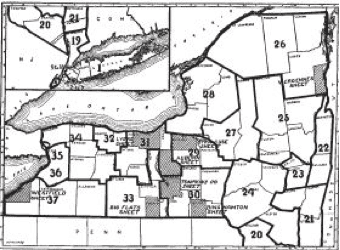
Soil maps like this one can be important resources in determining what type(s) of soil is present in your county and region.
To Find a Soil Survey:
Contact your local USDA Service Center, your NRCS State Soil Scientist, or your county Cornell Cooperative Extension office.
Resources for Soil Services
| Agro-One Agronomic Laboratory Services | Agro-One Services analizará los nutrientesy el pH del suelo y le indicará la cantidad de cal y de abono que necesita. Las muestras de suelo pueden enviarse por correo, por UPS o llevarse a los puntos de recogida de muestras de Dairy One (véase la página web), donde usted rellenará los formulariosy pagará las pruebas. Para más información, póngase en contacto con el laboratorio: | http://dairyone.com/ 800-496-3344 |
| La Evaluación Integral de la Salud del Suelo de Cornell | La Evaluación Integral de la Salud del Suelo de Cornell ofrece servicios de análisis del suelo. Mide la textura del suelo, la capacidad de agua disponible, la resistencia del penetrómetro de campo, la estabilidad de los agregados húmedos, el contenido de materia orgánica, las proteínas del suelo, la respiración, el carbono activo y la evaluación del contenido de macro y micronutrientes. Hay indicadores adicionales disponibles como complementos, como la presión de patógenos sobre las raíces, la salinidad y la solidez, los metales pesados, el boro y el nitrógeno potencialmente mineralizable. Para más información y sobre cómo enviar una muestra, póngase en contacto con el departamento | http://soilhealth.cals.cornell.edu/ soilhealth@cornell.edu |
Funding
For information on grants and financial opportunities for your farming operation, visit the ‘Grant Opportunities for Farmers’ fact sheet.

